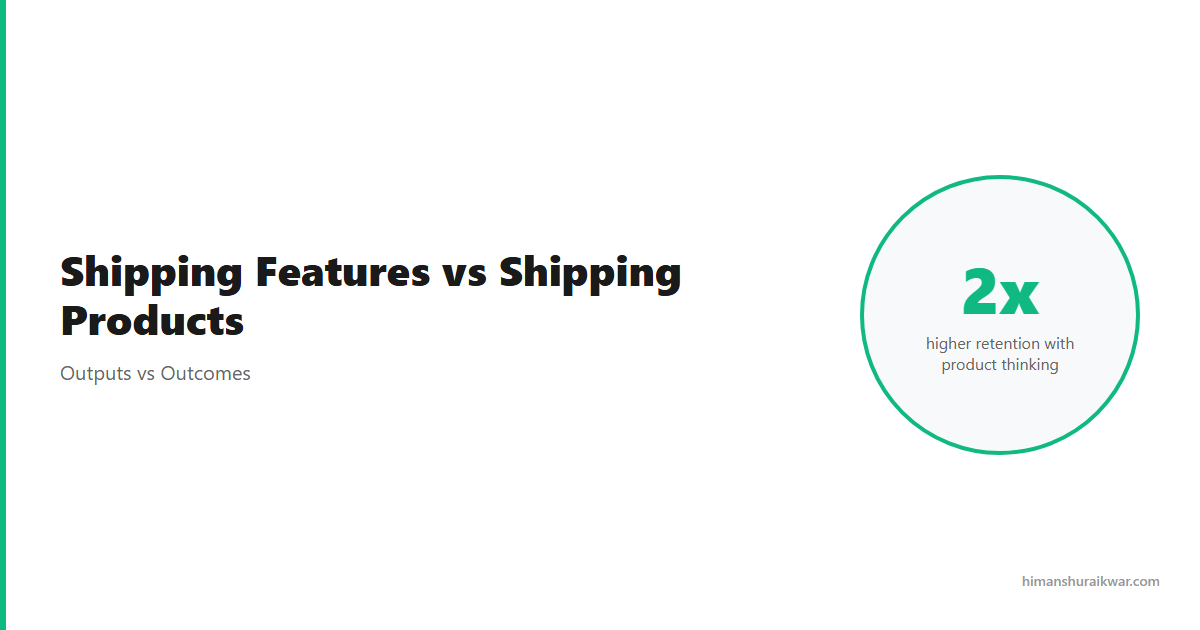
Your team shipped 47 features last quarter. Your churn rate went up 12%. Shipping features isn’t the same as shipping products. Most teams confuse activity with progress. Your team shipped 47 features last quarter. Your churn rate went up 12%. Shipping features vs shipping products—most teams confuse activity with progress.
The feature factory is real. Teams measure success by velocity, story points, and release counts. But none of that matters if customers don’t care about what you’re building.
Features Are Outputs. Products Are Outcomes.
A feature is something you build. A product is something someone uses. The gap between building and using is where most teams fail.
Shipping features means releasing code. Shipping products means delivering value. You can ship 100 features and still have a failing product. You can ship 3 features and have a thriving one.
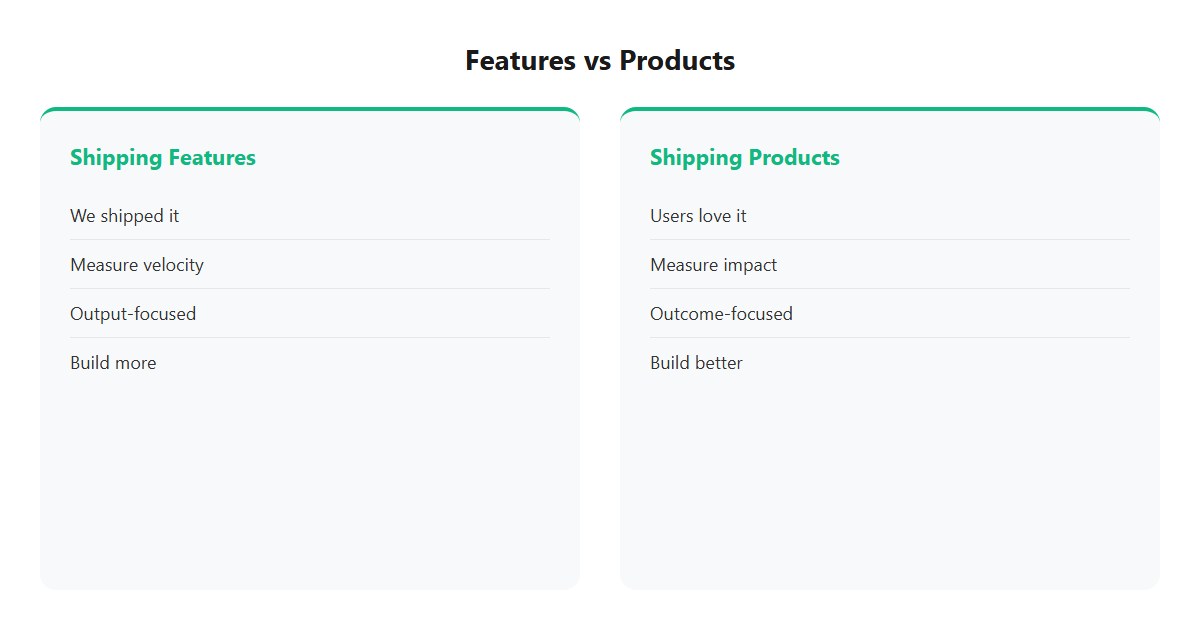
| Shipping Features | Shipping Products |
|---|---|
| “We shipped it” | “Users love it” |
| Measure velocity | Measure impact |
| Output-focused | Outcome-focused |
| Build more | Build better |
The difference isn’t semantic. It’s strategic. Teams that ship products think differently than teams that ship features.
Why Teams Get Stuck in Feature Mode
Feature mode feels safe. You can point to a list of completed work. You can show progress to stakeholders. You can justify your existence.
But feature mode is a trap. When you measure by output, you optimize for output. You start building things because they’re easy, not because they’re valuable. You avoid hard problems because they don’t ship fast.
The result? A product full of features nobody asked for and problems nobody solved.
| Feature Factory Symptoms | Product Thinking Symptoms |
|---|---|
| “We need more features” | “We need better outcomes” |
| Success = shipped | Success = impact |
| Roadmap = feature list | Roadmap = hypothesis list |
| Velocity is king | Learning is king |
The shift from features to products requires courage. You have to say no to easy wins and yes to hard problems.
How to Ship Products Instead of Features
Shipping products starts with asking different questions. Instead of “What should we build?” ask “What problem should we solve?”
Question 1: What outcome are we targeting?
Don’t start with features. Start with the metric you want to move. Retention? Activation? Revenue? Define success first.
Question 2: How will we know it worked?
Before you build anything, define how you’ll measure impact. If you can’t measure it, don’t build it.
Question 3: What’s the smallest thing we can build to test this?
Don’t build the full feature. Build the minimum version that lets you learn. Test fast. Learn fast. Iterate.
This approach feels slower. It’s actually faster because you avoid building things that don’t matter.
The Business Case for Product Thinking
Product thinking isn’t just good design practice. It’s good business.
Companies that ship products instead of features see:
- 2x higher retention because they solve real problems
- 3x faster growth because word-of-mouth drives adoption
- 40% lower churn because users get value they can’t find elsewhere
The math is simple. Building fewer, better things beats building more, worse things. Every time.
How to Escape the Feature Factory
Escaping feature mode requires leadership. Someone has to ask the hard questions. Someone has to push back on easy wins. Someone has to redefine success.
Start with your metrics. Replace velocity with impact. Replace story points with outcomes. Replace roadmaps with hypothesis lists.
The feature factory is comfortable. Product thinking is powerful. Choose wisely.