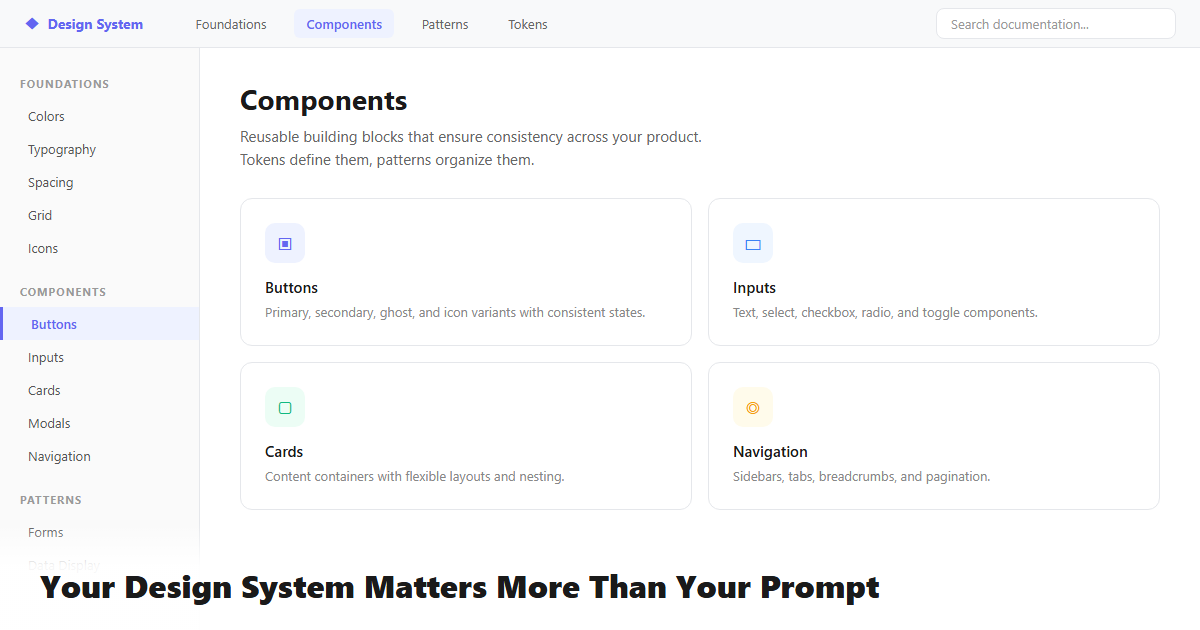
Everyone’s obsessing over prompts. Design system vs prompt engineering—it’s not even close. A great prompt without a design system is a one-time trick. A design system makes every prompt, every component, and every feature consistent by default.
The data proves it. Teams with mature design systems ship 47% faster and spend 60% less time on rework. Yet most teams invest hours crafting prompts while ignoring the system that would make those prompts unnecessary.
Why Design Systems Beat Prompts Every Time
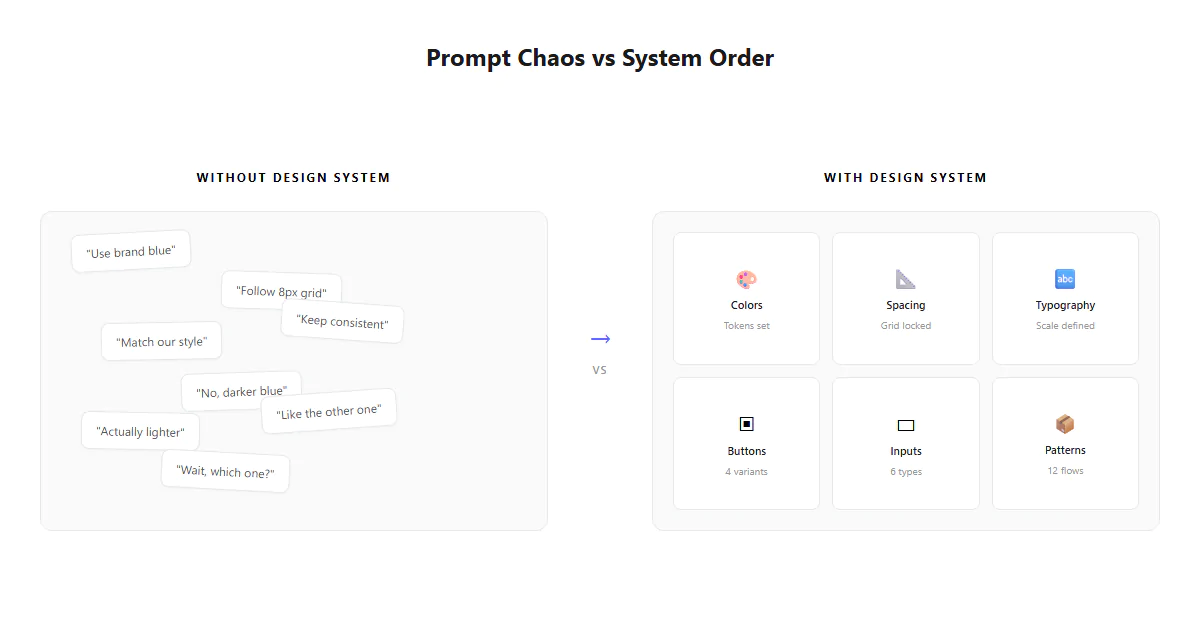
A prompt is a one-time instruction. A design system is a permanent foundation. When you write a prompt, you’re solving one problem. When you build a design system, you’re solving every future problem.
The design system vs prompt engineering debate isn’t really a debate. Prompts are tactical. Systems are strategic. Prompts change with every request. Systems evolve slowly and deliberately.
| Design System | Prompt Engineering |
|---|---|
| Permanent foundation | One-time instruction |
| Solves every future problem | Solves one problem |
| Consistent by default | Consistent by effort |
| Scales with your team | Scales with your skill |
The best teams don’t choose between design systems and prompts. They build design systems that make prompts trivial.
The Hidden Cost of Prompt Dependency
When you rely on prompts, you’re carrying invisible weight. Every new feature requires a new prompt. Every team member needs to learn prompt craft. Every output needs manual review.
This creates a dependency cycle. The more prompts you write, the more you need. The more you need, the more fragile your system becomes. One person leaves, and their prompts leave with them.
Design systems break this cycle. They capture decisions in code, not in chat windows. They make consistency automatic, not effortful. They turn tribal knowledge into shared infrastructure.
How Design Systems Power Better AI Output
Here’s the insight most teams miss: AI tools work better when they have a design system to reference. Instead of writing elaborate prompts to explain your brand, feed your design system directly into the AI.
Design tokens, component libraries, and style guides give AI the context it needs. The model doesn’t need you to describe your color palette—it can read it. It doesn’t need your spacing rules—it can follow them.
| Without Design System | With Design System |
|---|---|
| “Use our brand blue #1E40AF” | AI reads tokens automatically |
| “Follow our 8px spacing grid” | AI follows grid by default |
| “Match our typography scale” | AI uses scale without asking |
This is the real design system vs prompt engineering advantage. The system does the work. The prompt just points the direction.
Building a Design System That Works with AI
You don’t need a massive design system to get started. You need three things:
1. Design Tokens
Define your colors, spacing, typography, and shadows in a structured format. JSON or CSS custom properties work. This gives AI a readable vocabulary.
2. Component Specifications
Document your core components: buttons, inputs, cards, navigation. Include states, variants, and usage guidelines. This prevents AI from reinventing components.
3. Pattern Guidelines
Describe your common patterns: forms, modals, notifications, page layouts. This gives AI a template to follow instead of starting from scratch.
These three elements create a design system that AI can actually use. No elaborate prompts required.
The Future Is System-First
The teams winning with AI aren’t writing better prompts. They’re building better systems. They’re investing in design infrastructure that makes AI outputs consistent, reliable, and scalable.
Prompt engineering is a temporary skill. System design is a permanent advantage. Build the system. The prompts will take care of themselves.