Most designers skip the boring part. They open Figma, start sketching screens, and hope the product magically works. Product documentation is the unglamorous foundation that separates successful products from beautiful failures. Without it, you’re building on sand. The product documentation importance can’t be overstated—it’s the foundation that separates successful products from beautiful failures.
The data backs this up. Teams with clear product documentation complete projects 30% faster and spend 40% less time reworking features. Yet most design teams treat documentation as an afterthought. That’s a mistake that costs months of wasted effort.
Why Product Documentation Matters More Than Ever
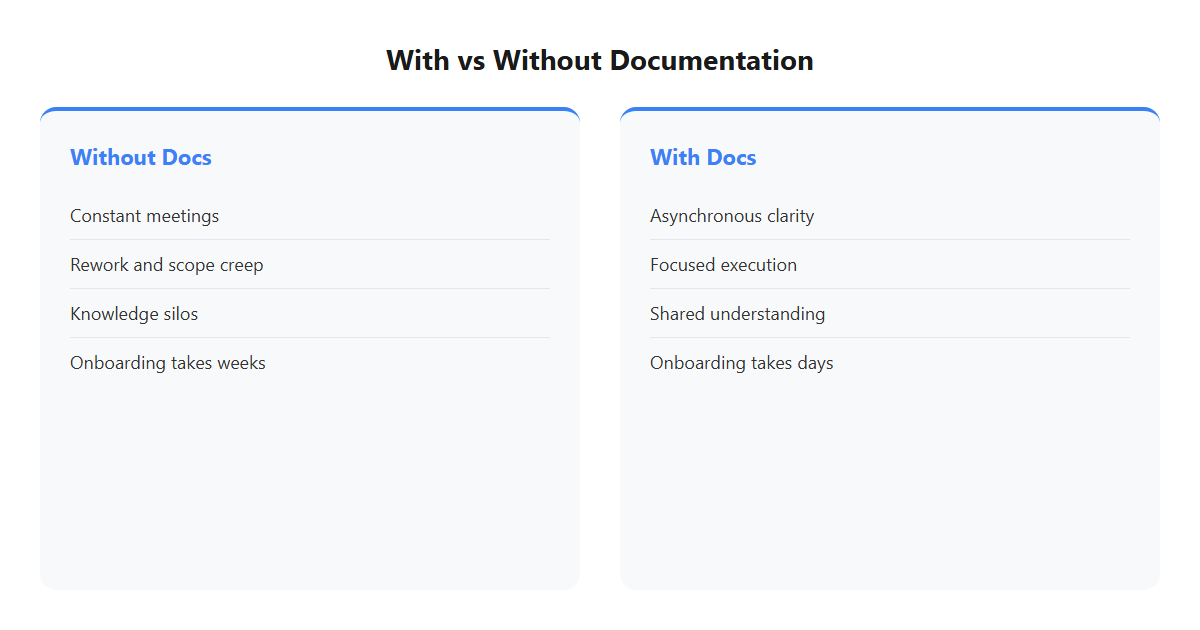
Product documentation isn’t just about writing things down. It’s about creating a single source of truth that aligns your entire team.
When everyone understands the problem, the solution becomes obvious. When documentation is vague or missing, chaos follows. Engineers guess. Designers assume. Stakeholders disagree. The product suffers.
| Without Documentation | With Documentation |
|---|---|
| Constant meetings to align | Asynchronous clarity |
| Rework and scope creep | Focused execution |
| Knowledge silos | Shared understanding |
| Onboarding takes weeks | Onboarding takes days |
Good product documentation captures three things: what you’re building, why you’re building it, and who you’re building it for. Everything else is details.
The 3 Documents Every Product Needs
You don’t need a 100-page wiki. You need three focused documents that answer the essential questions.
Document 1: The Product Brief
A one-page summary of the problem, the solution, and the success metrics. This is your north star. When conversations drift, return to the brief.
Document 2: The User Story Map
A visual breakdown of user flows, pain points, and priorities. This tells you what to build first and what can wait.
Document 3: The Design Spec
Technical specifications that engineering needs to implement your vision. Include edge cases, error states, and accessibility requirements.
These three documents work together. The brief sets direction. The story map sets priority. The spec sets execution.
How Bad Documentation Kills Good Products
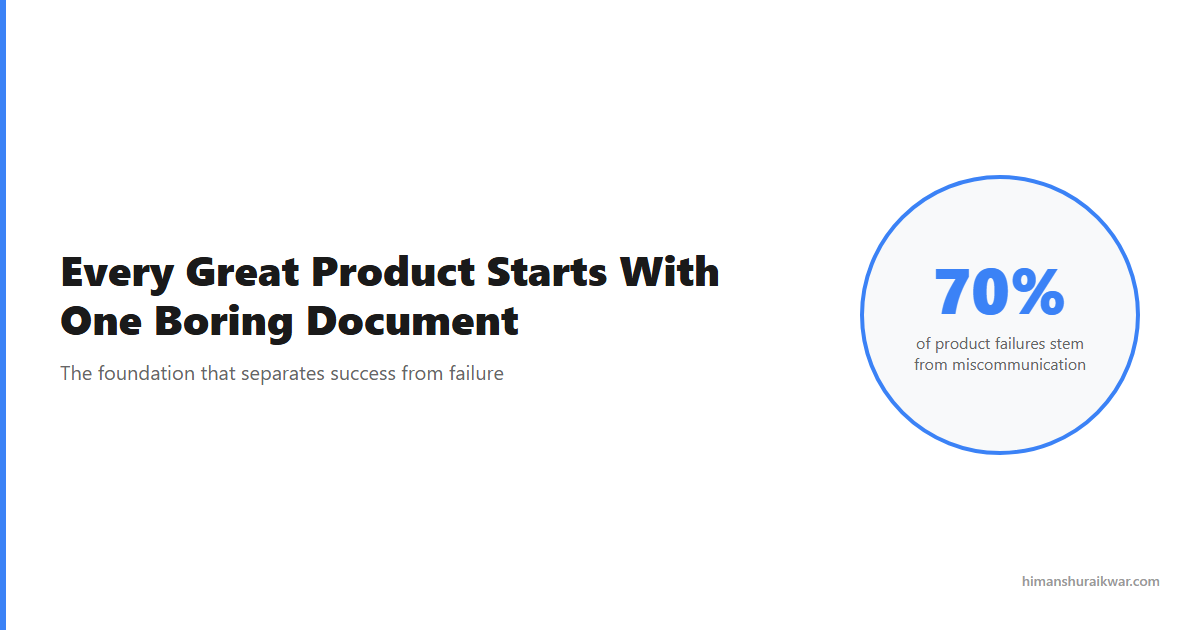
Consider this: 70% of product failures stem from miscommunication, not lack of talent. Teams with brilliant designers and engineers still fail when they’re not aligned.
Bad documentation creates a ripple effect. One unclear requirement leads to three rounds of revisions. Three rounds of revisions lead to missed deadlines. Missed deadlines lead to cut corners. Cut corners lead to bad products.
The fix is simple. Invest one hour in documentation before you invest 100 hours in design. That hour will save you weeks.
The Real Cost of Skipping Documentation
Most teams think documentation slows them down. The opposite is true.
| Activity | Without Docs | With Docs |
|---|---|---|
| Initial design | 2 days | 3 days |
| Stakeholder review | 5 rounds | 2 rounds |
| Engineering handoff | 3 meetings | 1 meeting |
| Rework | 40% of time | 10% of time |
| Total | 12 days | 7 days |
The math is clear. Documentation front-loads effort but saves massive time downstream. It’s the difference between building a house with a blueprint and building one by guessing.
How to Start Writing Product Documentation Today
You don’t need to be a technical writer. You need to answer five questions:
1. What problem are we solving? (One sentence)
2. Who are we solving it for? (Specific user persona)
3. What does success look like? (Measurable metrics)
4. What are we NOT building? (Scope boundaries)
5. What are the constraints? (Timeline, budget, tech)
Write the answers down. Share them with your team. Iterate based on feedback. That’s documentation.
Product Documentation as a Design Skill
The best designers I know treat documentation as a design skill. They understand that clarity is a feature. That alignment is a requirement. That boring documents enable exciting products.
Product documentation isn’t separate from design work. It IS design work. It’s designing the process that creates the product.
Start with one document. Write the product brief. Share it. Watch how it transforms your team’s conversations, decisions, and outcomes.