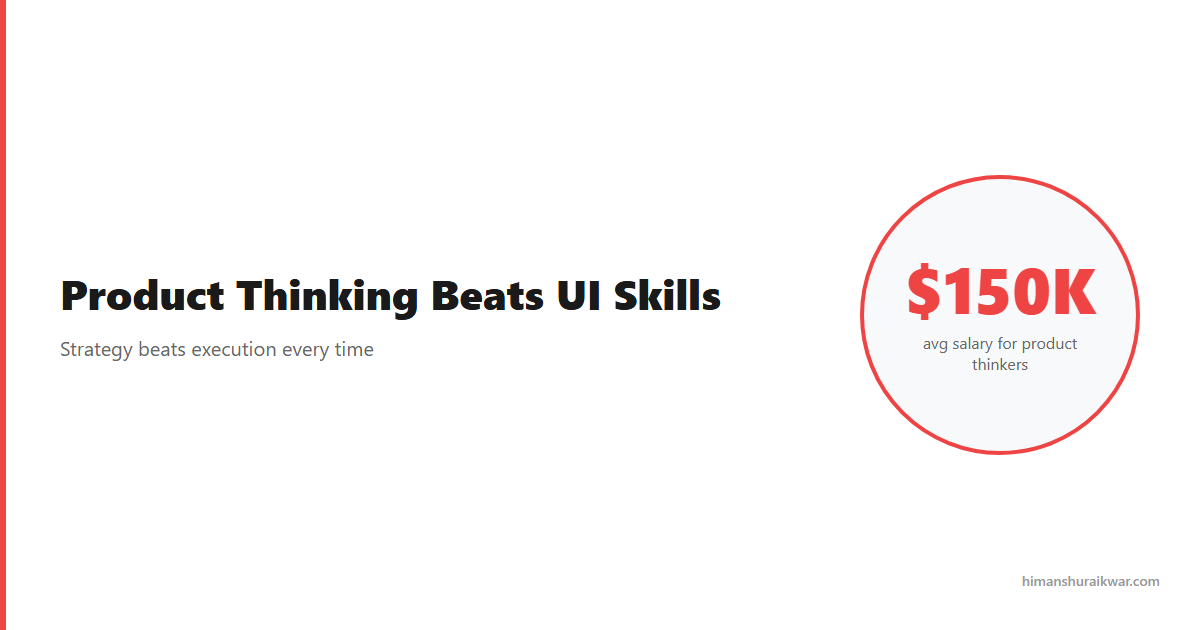
UI skills are table stakes. Product thinking is the winning hand. In 2026, the designers who thrive aren’t the ones with the prettiest portfolios. They’re the ones who think in outcomes. UI skills are table stakes. Product thinking vs UI skills—the winning hand in 2026. The designers who thrive think in outcomes.
The market has shifted. AI can generate interfaces in seconds. Visual design skills are commoditized. What can’t be automated is the ability to understand users, define problems, and drive business results.
The UI Skills Trap
UI skills are seductive. They’re tangible. You can show a portfolio of beautiful screens. You can demonstrate mastery of Figma, color theory, and typography.
But UI skills have a ceiling. They make you a good executor. They don’t make you a strategic thinker. And in a world where AI handles execution, strategic thinking is what matters.
| UI Skills | Product Thinking |
|---|---|
| “How do I make this look good?” | “How do I make this work well?” |
| Focus on execution | Focus on strategy |
| Measured by aesthetics | Measured by outcomes |
| Replaced by AI | Augmented by AI |
The gap between UI skills and product thinking is the gap between a $80K salary and a $150K salary. It’s the gap between a junior role and a leadership role.
What Product Thinking Actually Is
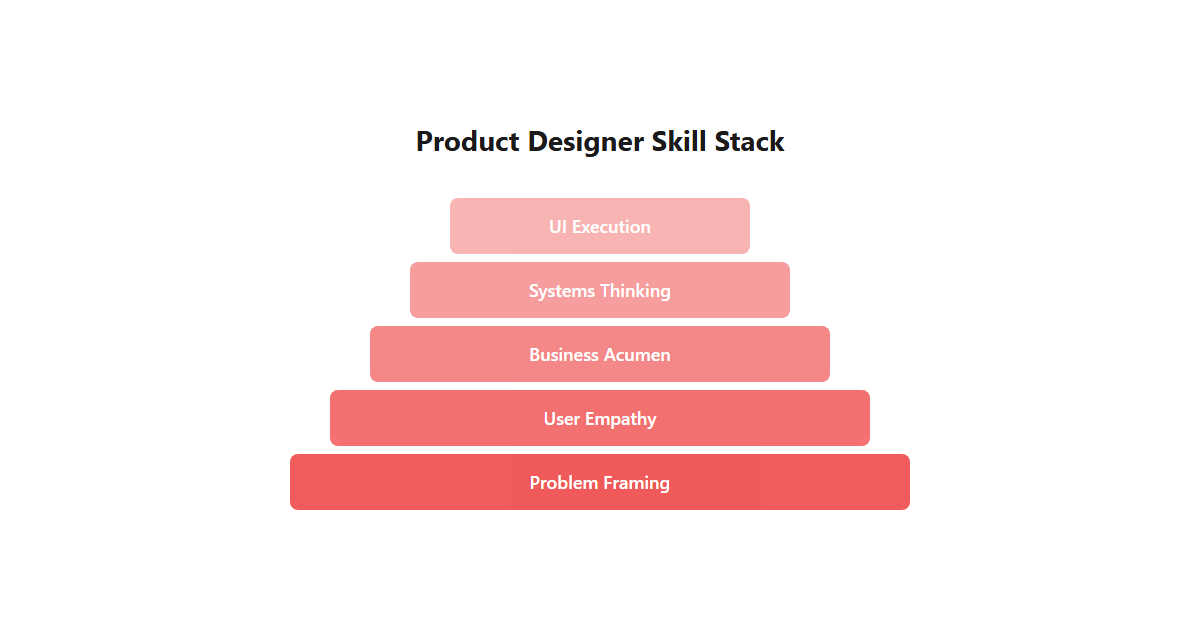
Product thinking isn’t a buzzword. It’s a specific set of skills:
Problem framing: The ability to define the right problem before jumping to solutions. Most designers skip this step.
User empathy: Understanding not just what users say, but what they do, need, and feel. This requires research, not assumption.
Business acumen: Connecting design decisions to business outcomes. Understanding metrics, revenue, and market dynamics.
Systems thinking: Seeing the product as part of a larger ecosystem. Understanding how changes ripple through the system.
These skills are hard to learn but impossible to automate. They’re the foundation of design leadership.
How Product Thinking Drives Better Outcomes
Product thinking isn’t theoretical. It produces measurable results.
| Without Product Thinking | With Product Thinking |
|---|---|
| Build features | Solve problems |
| Ship more, impact less | Ship less, impact more |
| React to requests | Proactively identify opportunities |
| Justify decisions with aesthetics | Justify decisions with data |
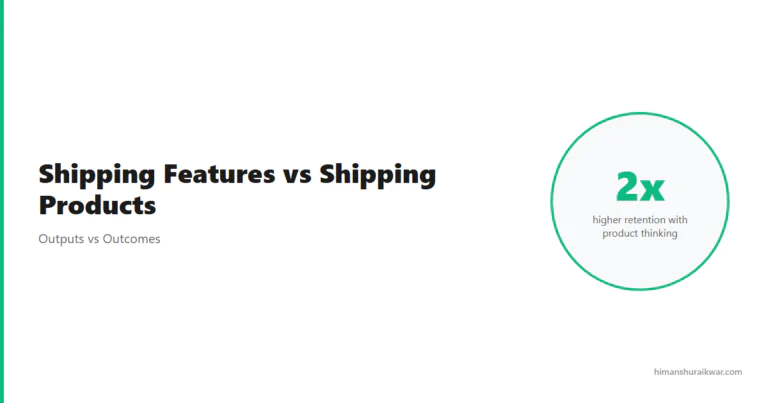
Companies with strong product thinking see 2x higher retention, 3x faster growth, and 40% lower churn. The ROI is undeniable.
How to Build Product Thinking Skills
Product thinking isn’t innate. It’s learned. Here’s how:
Talk to users. Schedule 3 user interviews per month. Listen more than you speak. Understand their world, not just their feedback.
Learn the business. Understand how your company makes money. Read financial reports. Talk to sales and customer success.
Measure everything. Define success metrics before you design. Track impact after you ship. Let data guide decisions.
Think in systems. Map how your feature connects to other features. Understand second-order effects. Design for the ecosystem, not just the screen.
This takes time. But the payoff is career-defining.
The Designer’s Evolution
The design profession is evolving. The designers who thrive will be the ones who evolve with it.
UI skills got you in the door. Product thinking will determine how far you go. The question isn’t whether you need product thinking. It’s how fast you can develop it.
Start today. Talk to one user. Learn one business metric. Think in outcomes instead of outputs. The shift begins with a single step.